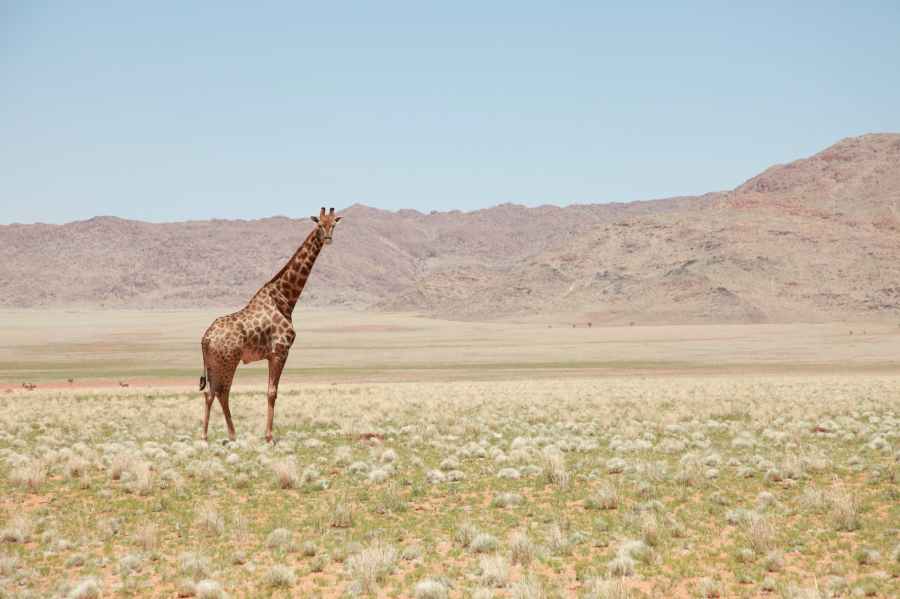
177 cm. This is my height. In my native country Japan, where women’s average height is 157cm(*1), it is considered very tall. Women who are the same height as me or higher make up only 0.03% of my age group (*2). That is roughly one in every 3,300 adult females.
I hated being so tall long before I learned the phrase “inferiority complex”. Being a tall girl in Japan was not fun. People often made fun of my height. Dresses or shoes were almost always too small for me. I was reluctant to ask boys out as I was afraid they would not like a “jumbo” girlfriend. That was an adjective I’ve heard more than once. Too many unpleasant memories to write about.
But one thing bothered me the most… being pried on by strangers. People would stare at me as if they have spotted a rare animal. Then sooner or later, they would ask me, without exception:
“How tall are you?”
I have been asked this question hundreds of times over the years. And the following conversation was also predictable:
“Are your parents tall as well?”
“Do you play basketball?”
“You must have never hemmed your jeans.”
“Can you spare me some of your height?”
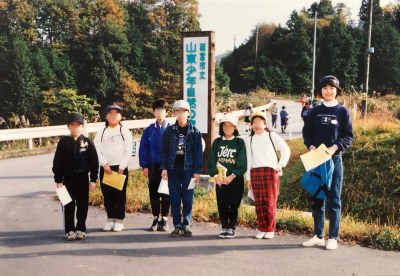
“I don’t understand why so many people ask about my height. Why is it so important to them?”
When I was 12, and my height surpassed 170cm, I complained to my mother.
My mom, who was by then 6cm shorter than me, looked at me with confusion and compassion.
“They say things to you because they believe being tall is a good thing. They may want to befriend with you as they find you cool”, she consoled me.
I was encouraged by mom’s words, but not fully satisfied with that logic. I thought it was odd to ask someone about their measurements even if it was well-intentioned. In fact, I still wonder why it is so to this day.
Imagine when you meet someone who is very much in good shape. Would you make comments such as: “Wow, you are so thin! How much do you weigh?” I don’t think so.
How about… “Do your parents also have fair skin?”
“Have your eyes always been that shape since your childhood?”
It would be very strange to ask those questions when you meet someone for the first time.
Nonetheless, a lot of people seem to think it is okay to ask about your height. And I, who didn’t want to create a bad impression, felt I had no choice but to politely answer those same recurrent questions. But very often I felt like retorting with “Does my height matter to you?”
Anyhow, I spent my teenage years hitting my head on doorways, getting sore feet trying to wear size 9 shoes as I couldn’t find size 10 in ladies shoes and even having to stoop down to cook in my own kitchen.
One day, my mom said to me.
“You should go abroad when you grow up. It will be easier for you to live in a country like the United States.”

That advice was not the sole reason for my decision, but I moved to the United States when I was 26. Since I loved the arts, I chose New York for my destination. My initial purpose was to study arts management, but my ultimate goal was to see the world. I wanted to stretch myself metaphorically and literally.
It would be a cliche if I say the changing the circumstances changed my life. But it was certainly true for a girl from the far east who dived into the diversity of the big apple.
I learned there are many different standards of beauty. In Japan, where 98.1% of the population is Japanese(*3), people seem to be overly conscious about negligible differences in their appearance. But in New York, I started to understand that it makes no sense to look at those minor differences in a place with so many different nationalities, races, body types and lifestyles. If there be any beauty standard, it would probably be how unique you are.
The average height of women in the United States is 162.1cm. Even in New York, I was still “a tall girl”. But I would get asked about my height far less frequently. Instead, people asked me “Where are you from?” or “What made you come to New York?”. Every time I got asked those questions, I remembered that I have chosen to come to that city to chase my dream.
But on top of all those queries, there was another question which made me really uncomfortable.
“What do you do?”
That was the most daunting yet the most frequent question I was asked. I would feel that I was useless if I didn’t achieve anything in New York. It is a city where millions of people from different backgrounds are, in a sense, competing with one another. It seemed to be an epitome of meritocracy. A person’s appearance didn’t really seem to matter nor even their personality. What really mattered was what the person could do: How unique you are, how much value you can provide to the society, or bluntly put, how much money you can make.
I met countless people who had impressive resumes and exceptional talents. And those remarkable individuals were making every effort to become somebody, regardless of their backgrounds.
Compared to them, it seemed I was not trying hard enough. I barely managed to keep up with my studies and the internship at a theatre production company. I felt an inferiority complex as I was asked the questions about what I do over and over again. I felt I was nobody. That inferiority complex is still tormenting me to this day.
I think most of us have experienced some kind of inferiority complex at some point in our lives. Some people may try hard to conquer it, some would just ignore it, some would give up and accept it. In my case, I just forgot my inferiority complex. At a time when I was facing more serious setbacks of existential crisis, I didn’t care less about my height.
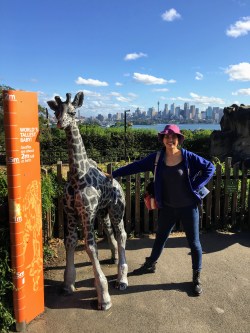
After the number of years abroad, I am back in Japan. But now I no longer bother about my height. Occasionally, I get reminded that I am quite tall. For instance, a few weeks ago two high-school boys were talking behind me when I was waiting for a train.
“Look, she’s really tall.”
“Geez, she’s taller than me!”
But I don’t whimper when I hear such remarks anymore. Instead, I see it as a result of Japan’s homogeneity and peacefulness as people can afford to care about such trivial disparities.
These days, the number of foreigners living in Japan is increasing. And in this social climate, diversity is becoming more acceptable. But still, I feel that people are very prone to pick up subtle differences in small groups.
Unfortunately, no single individual is powerful enough to change such social norms. But I’m hoping I could be a catalyst for 0.03% of Japanese women who happened to be tall.
I used to curse the peculiar fate which forces me to make the vertical measurement of my body known to most people I meet. But for now, I’m starting to enjoy living under such an anomalous star.
And so I’m wondering what is the best answer to give when asked: “How tall are you?”
I am very tempted to reply from my viewpoint, over 99.97% of people cannot see.
“Thank you for your interest. But actually, I have been asked that question Xth times in my life so far. Can we talk about something a little bit more original?”
That would be a fair starting point for a conversation. Next time someone asks me how tall I am, I would like to dare to say that. I think our differences make us more interesting.
I might be aiming too high. But I believe I can reach if I try hard.
How can I be so sure?
Well, I can tell you, because I’m tall.

――
Reference:
*1 National Health and Nutrition Survey 2017 (Japanese)
https://www.e-stat.go.jp/stat-search/files?page=1&toukei=00450171&tstat=000001041744
*2 School Health Statistics Report 1999, National Chart, Distribution of Height per Age, Female (Japanese)
https://www.e-stat.go.jp/dbview?sid=0003039289
*3 Annual Statistics Report of Foreign Residents: Overview of the Survey Result, 2016 (Japanese)
http://www.moj.go.jp/content/001237697.pdf
 A Thousand Years